What no one tells you about your body in pregnancy (And why it matters more than you think)
Pregnant women today are some of the most informed women in history. They know about hypnobirthing, they’ve compared prams, they’ve downloaded the apps, they know what size fruit the baby is this week and they’ve read about cord clamping, birth pools and perineal massage.
And yet, in clinic, one of the most common things I hear is “I didn’t know this could happen in pregnancy. I thought something was wrong.”
They’re talking about rib pain that wraps around the back, heartburn that seems relentless, a pelvis that suddenly feels unstable, sciatic-type pain that appears out of nowhere, shoulders that ache, a jaw that feels oddly tight, simply the sense of not quite feeling like themselves in their own body. Pregnancy books are very good at explaining what the baby is doing. They’re less good at explaining what you are doing. Because you’re not simply growing a bump. Your whole body is adapting.
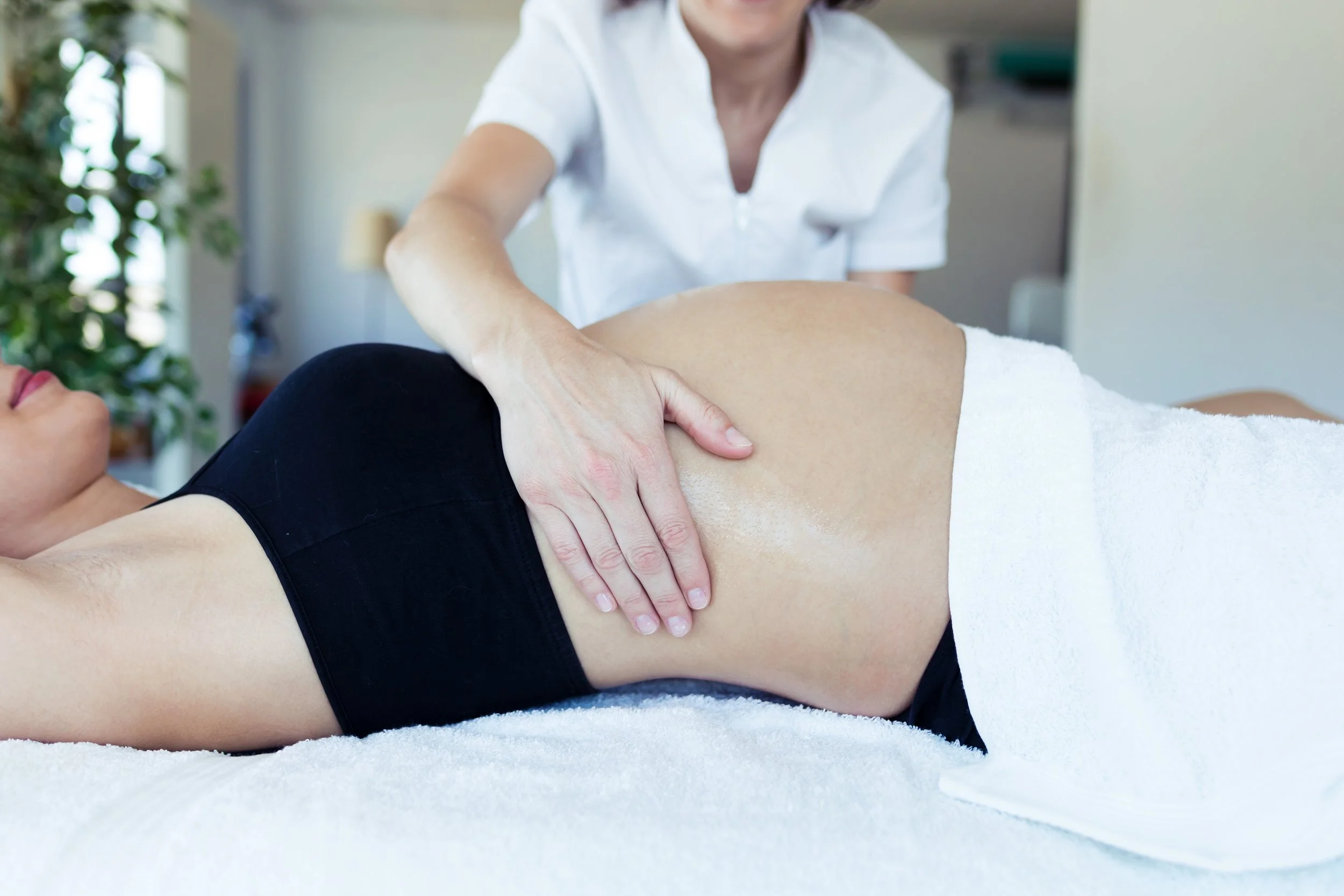
It’s Not Just Weight at the Front
One of the simplest ways I explain pregnancy in clinic is this - Imagine you’re renovating a house while still living inside it; you’re widening spaces, softening structures and redistributing weight.
But the heating is still on. Life is still happening. You still have to go to work, carry shopping, pick up toddlers, sit at desks. Pregnancy isn’t static. It’s dynamic. Your ribcage widens. Your diaphragm changes how it moves. Ligaments soften. Your centre of gravity shifts and when those changes meet tension; long hours sitting, stress, previous injuries - symptoms appear. Not because your body is failing. Because it’s adjusting.
The “Something Must Be Wrong” Moment
I’ve had women walk into my clinic in tears because their pelvic girdle pain was so severe they were limping. Some have been using crutches. One woman once joked that she felt ninety years old at 28 weeks pregnant. And then they’re shocked when, with the right support and guidance, things improve. Not overnight. But steadily.
Often what’s missing isn’t strength or stretching - it’s understanding how to move differently:
How to get out of the car.
How to turn in bed without twisting through the pelvis.
How to use breath instead of bracing.
Small mechanical changes can reduce load dramatically. And the relief on someone’s face when they realise their body isn’t “breaking” is profound.

The Upper Body Matters More Than You Think
Here’s something that often surprises people:
When someone comes in with pelvic pain, I frequently start by working through their ribcage and shoulders. Because the diaphragm - your main breathing muscle -sits just beneath the ribcage. And it works in partnership with the pelvic floor. If the upper body is tight and compressed, the lower body often mirrors that tension. This is also why heartburn and reflux can worsen as pregnancy progresses. Yes, hormones play a role. But so does pressure.
As the uterus rises, it pushes upward into the diaphragm and stomach. If the ribcage and upper back are already stiff, there’s less room for that pressure to distribute. I’ve seen women’s reflux ease simply by improving how their ribcage moves and how they sit. It’s not magic. It’s mechanics.

Learning to Move Differently
Pregnancy often requires a subtle shift in how you use your body.
It might mean:
•Taking wider steps when walking
•Avoiding twisting on one leg
•Swapping deep lunges for supported strengthening
•Using a Swiss ball instead of a rigid chair
•Sleeping with more thoughtful pillow support
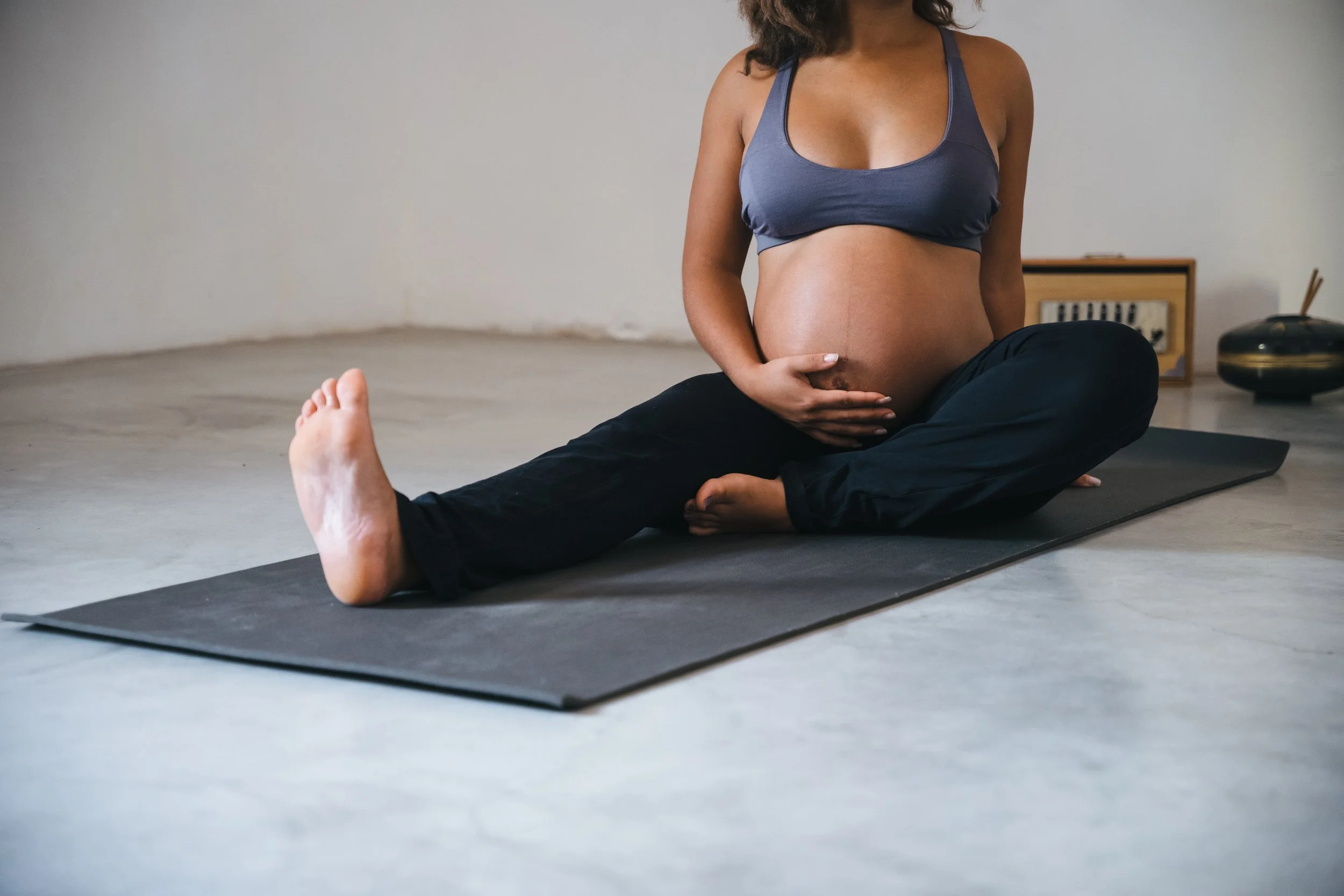
For some women, prenatal yoga is brilliant. For others, certain movements flare symptoms. Some feel better exercising gently. Others need more rest.
There isn’t one universal plan - and that’s important. What matters most is learning to listen to your body and adjust accordingly, rather than pushing through because you think you “should” be doing something.
Support Isn’t Weakness
Pelvic belts, supportive leggings, well-fitted bras, good footwear - these aren’t admissions of defeat. They’re tools. Hydration matters. So does protein intake. So does iron, vitamin D and magnesium levels. Breathwork matters. So does posture. So does simply not sitting slumped for hours on end. Pregnancy is physical, but it’s also responsive, and when women understand that, they feel more empowered.
The most important thing I can say is this: I regularly see pregnant women feel significantly better; even those who arrive limping, even those who feel frightened by their symptoms and even those who’ve been told, “It’s just pregnancy.”
It is common. But it isn’t something you have to suffer through unsupported. Pregnancy asks your body to reorganise itself in extraordinary ways. When you understand what’s happening and make small, thoughtful adjustments - the body often responds beautifully. You are not fragile, you are adapting. And with the right guidance, that adaptation can feel far more manageable than you might expect.