Why parenting perfectionism erodes confidence and instinct
by Sarah Lucas
Parents today have access to more parenting information than any generation before them. Yet in my twenty-five years of teaching and working with families, I have never seen so many doubt themselves. More parents come to me for help than ever before. Their worries are real, but increasingly there is something else beneath the problem: a quiet conviction that they are failing their children.
Parenting has always been hard, but I think we have found new ways to make it harder. We compare more, question ourselves more and feel constant pressure to give our children more, do more and get everything right. Everything is more…
Childhood itself has become something to optimise, and parenting has followed - bigger, better, faster, with very little room left to simply ‘be’
.
The pandemic intensified that pressure notably. During confinement, we were suddenly raising our children within four walls, without the usual village around us: no grandmother at the door, and no friend to have coffee with and laugh about the chaos. Screens became our route out, and when we needed reassurance, online was the obvious place to look.
What was waiting for us there was an industry. And layered on top of all this was another shift that had been gathering pace for years: childhood itself had become increasingly competitive.

The parenting rat race
Parents are pulled into the race almost from the moment their children leave the womb. First it is sleep, feeding and milestones; then nursery places, clubs, schools, grades, prizes and universities. Children seem to hit the ground running, growing up in a culture that quietly insists that more is better. Nobody explicitly tells us childhood is a competition, but it creeps up almost unnoticed until suddenly we find ourselves in a figure of eight. A full diary begins to look like opportunity, achievement like happiness, and an empty afternoon like a failure to provide. Wanting to give our children every chance, we get pulled into the race too.

Well meant, and quietly impossible
Much of the parenting advice out there is thoughtful, well intentioned and often genuinely useful. The difficulty is that we are no longer dealing with advice alone, but with anever-growing collection of theories, each emphasising a different part of parenting and telling us what matters most.
The problem comes when one important idea crowds out another. For example connection matters enormously, but so does correction. Children need their feelings acknowledged, but they also need boundaries, guidance and adults comfortable leading them. Somewhere amid the competing messages, many parents have become frightened of getting that balance wrong. Discipline has come to feel punitive, correction damaging, and a firm boundary somehow at odds with being loving and emotionally responsive.
When we are surrounded by so much conflicting advice on all kinds of parenting topics, the message inevitably becomes blurred. What should feel instinctive becomes complicated, certainty gives way to hesitation, and parents begin to lose confidence in their own judgement. The more we are told how parenting should look, the harder it can become to trust ourselves to actually do it.

The impossible standard of modern parenting
And the pressure does not stop with the advice we are given. It is built into the structure of modern family life itself.
We want to give our children the best possible life, yet for many parents, providing that life means spending much of their waking hours away from them. Work asks us to behave as though we do not have children, while parenting asks us to behave as though we do not have jobs, leaving us endlessly caught between the two.
My dad always used to say, you cannot go to two weddings on the same day. His point was simple: you cannot be fully present in two places at once. Yet this is essentially what modern parents are asked to do every working day. Added beneath all of this is yet another well-meant pressure: the reminder to enjoy every minute because childhood passes so quickly. Of course we love our children fiercely, but loving them does not mean loving every moment of raising them. Some parts are wonderful, some are exhausting - those parts will be different for every parent. We can enjoy the bits we enjoy, survive the bits we do not, and still be very good parents.
There is also a growing habit of reminding parents how much they will miss these years when they are gone. Childhood does pass quickly, but constantly looking ahead can take us out of the moment we are actually in, and make the hard days feel as though we have somehow wasted them.

Let’s turn the volume down
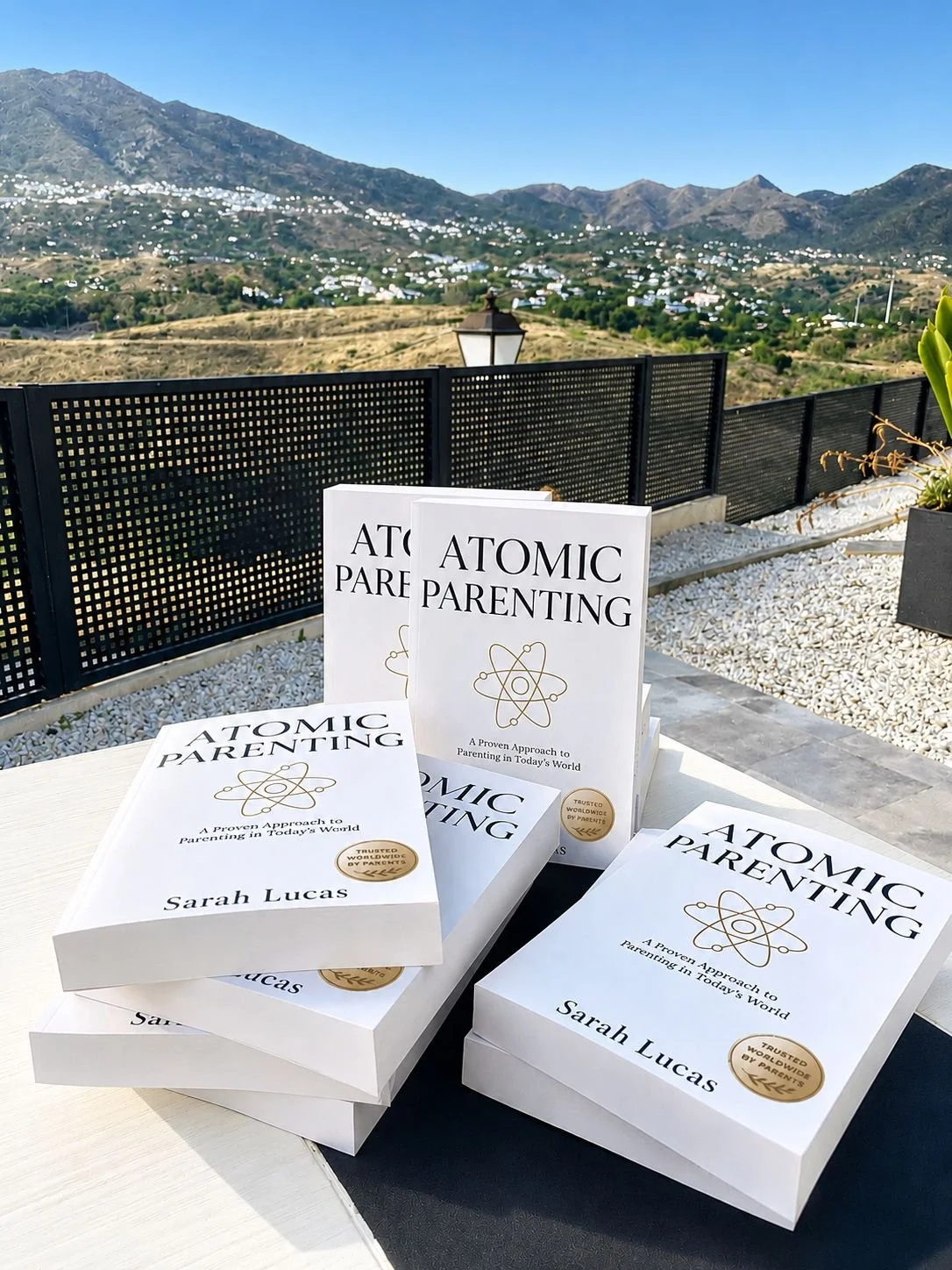
Parenting has always been hard, but hard things can be deeply rewarding when we feel we are doing them well. What strips so much joy from parenting today is not simply its difficulty, but the growing belief that however much we give, we are still falling short.That is at the heart of why I wrote Atomic Parenting: not to add another theory to the pile, but to help parents strip things back to simplicity, step out of the race and return to what has always mattered - love, attention, guidance, boundaries, mistakes, repair and simply being there as much as real life allows.
Children do not need relentlessly optimised childhoods or perfect parents. They need ordinary, dependable ones who know them, notice them, guide them and keep showing up. Our instinct has not disappeared; it has simply become harder to hear beneath the noise and comparison. Maybe the way forward is not to learn more, do more or become better, but to turn the volume down enough to trust what we already know.