The pregnancy support guide no one tells you about (Until your back starts hurting)
I'll never forget the moment I realised I needed help. It was week 20, I was standing in the kitchen making dinner, and my pelvis sent up a flare of pain so sharp I had to bite my tongue. My husband asked if I was okay, and I lied through gritted teeth: "I'm fine." But I wasn't fine. And here's what nobody tells you about pregnancy care- it's not one-size-fits-all, and what your body needs at 12 weeks is completely different from what it's screaming for at 20 + weeks.
I wish someone had sat me down early on and explained that proper pregnancy support isn't about buying one stretchy band and calling it done. It's about understanding how your body transforms through each trimester and adapting your support accordingly. So if you're reading this while rubbing your aching back or googling "is this normal?", this is the guide I desperately needed.
Why your support needs change throughout pregnancy
Pregnancy isn't a linear experience. Your body doesn't just gradually get bigger, it completely transforms. Each trimester brings completely different physical challenges. In the first trimester, I had the common symptoms; bloating, exhaustion, nausea but structurally I was fine. By the second, the pressure on my pelvis had built up and I started feeling twinges in my lower back too. By the third? I understood why pregnancy care products exist.
The problem is, most pregnancy support products are marketed as if pregnancy is one uniform experience. But a lightweight belly band that feels supportive at 20 weeks can feel laughably inadequate at 35 weeks when you're waddling around laden with an extra 25 pounds, all of it pulling your pelvis forward and compressing your spine. Different stages genuinely need different approaches and understanding this earlier would have saved me weeks of discomfort.

First Trimester: The deceptive calm
Weeks 1-13 are sneaky. Externally, not much seems to be happening. I looked relatively normal, felt exhausted and nauseous, but didn't think I needed any pregnancy support products yet. I was bloated by the evening, but nothing screamed "you need help." Looking back, this was actually the perfect time to educate myself about what was coming. You don't need structured support in trimester one, but you do need to start paying attention to your posture and how your body feels when you move.
Second Trimester: When reality hits
Around week 20, everything changed. I had a visible bump, and suddenly standing for more than 30 minutes made my lower back ache. Day to day tasks felt harder. Sitting at my desk all day left me stiff and sore. This is when most women start googling maternity belt for pregnancy options and I was no exception.
I tried a cheap belly band borrowed from a friend first. It was fine for light support, but it rolled up constantly and didn't actually take and pressure off my pelvis or back. What I didn't realise was that effective pregnancy support products aren't just stretchy fabric- they need to be biomechanically designed to redistribute weight properly.
By week 24, I was dealing with ligament pain and genuine back discomfort. This is when I started understanding that pregnancy care in the second trimester isn't vanity, it's about maintaining quality of life. I needed to keep working, keep moving, keep walking my dogs and for this I needed something effective.

Third Trimester: When support becomes non-negotiable
By week 32 I couldn't walk comfortably, I couldn’t get in and out the car without wincing and rolling over in bed required a full strategic plan. Getting up from the sofa meant bracing myself and moving in stages and I was still a minimum of 8 weeks away from my due date.
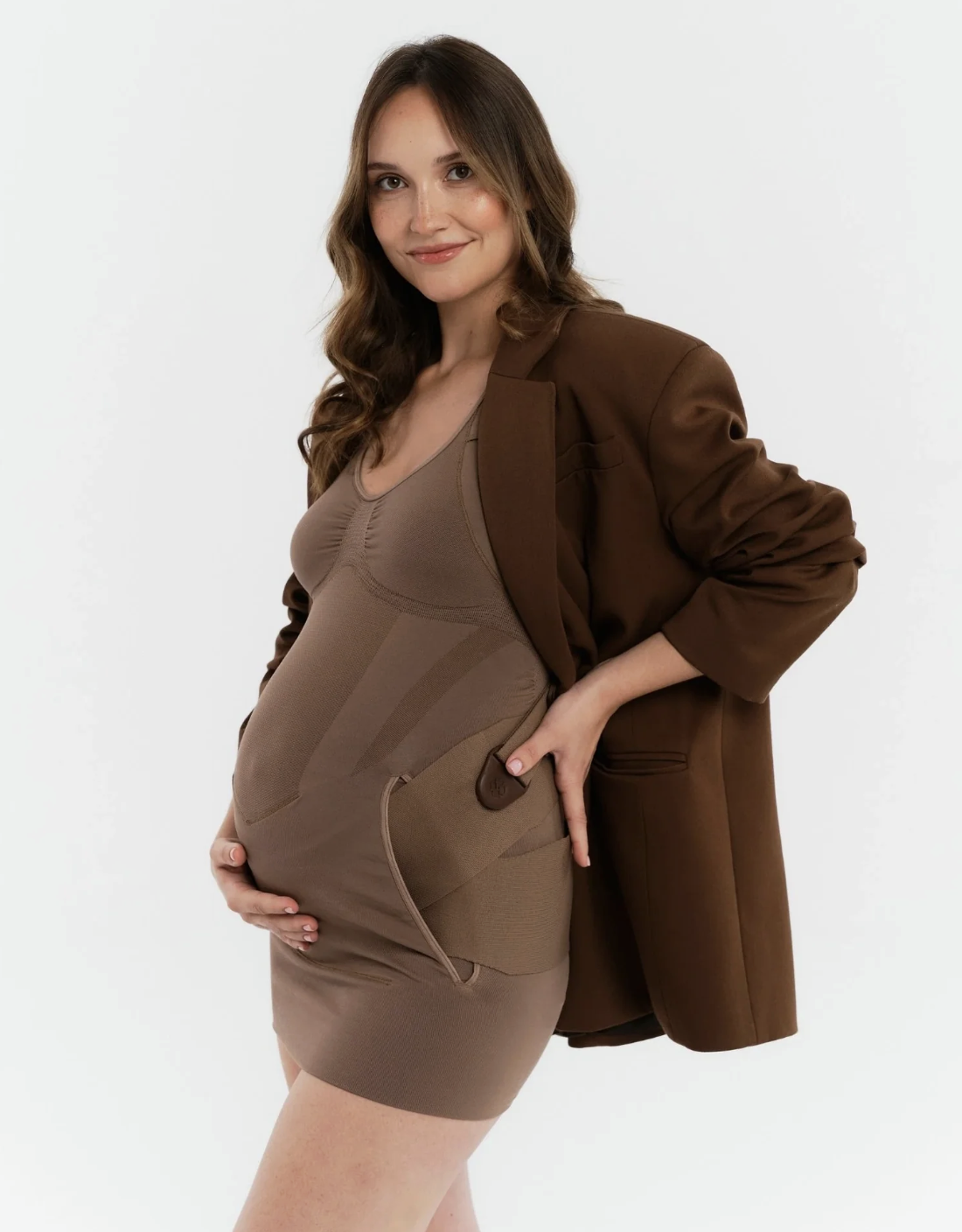
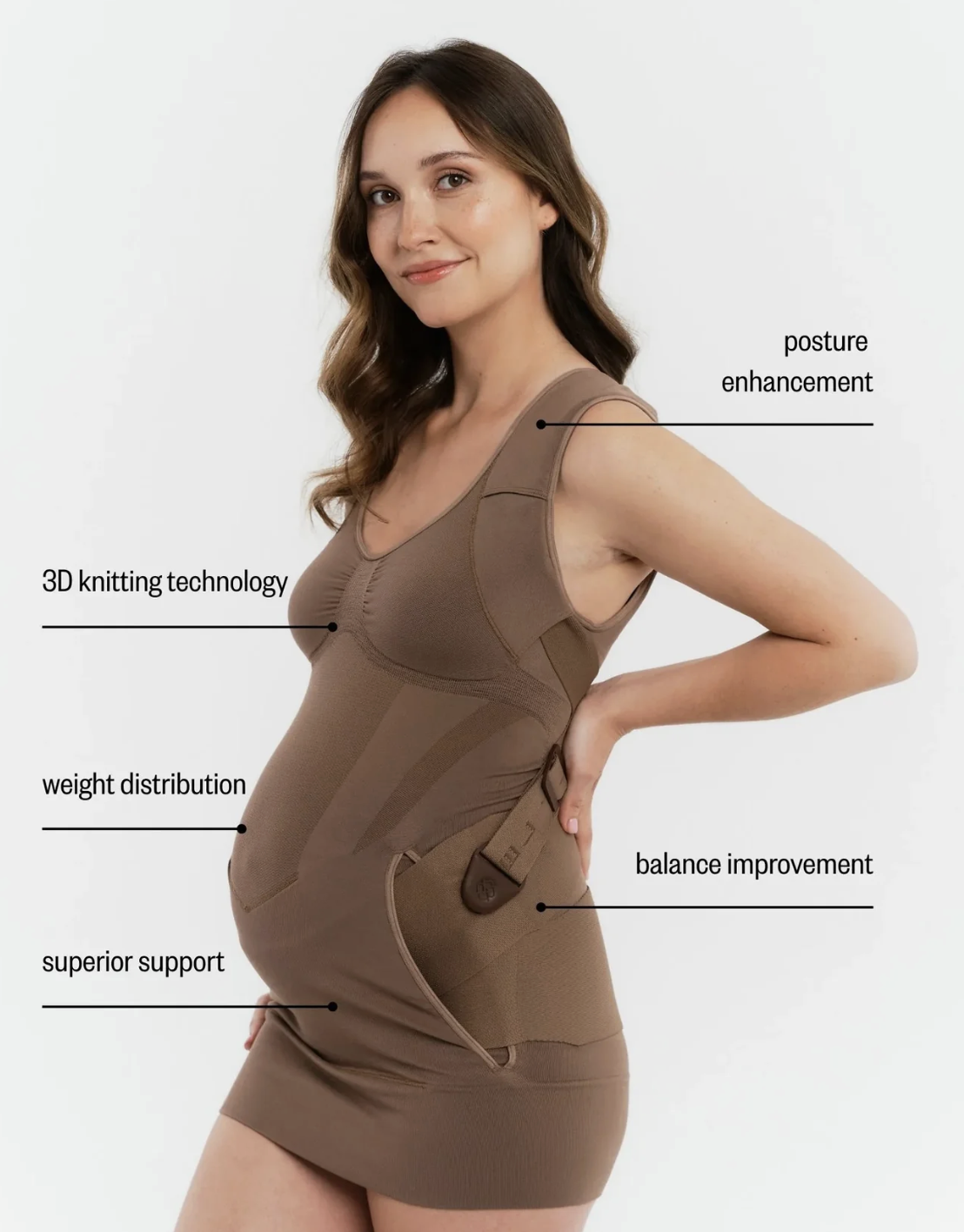
This is when I discovered Hugup, and I'm being completely honest when I say it changed my third trimester. What made Hugup different was the actual engineering behind it. It's Italian-made with 3D-knitted fabric and designed with biomechanics experts which sounds fancy, but what it meant in practice was that it actually distributed the weight of my bump instead of just holding it. The adjustable fastening meant I could customize the support level depending on what I was doing: tighter for walking, slightly looser for sitting at my desk.
I could feel the difference between this and the generic pregnancy support products I'd tried previously. It supported my pelvis, my lower back, and my bump in one piece, without the rolling, slipping, or digging in that cheaper options gave me. Was it an investment? Yes. Would I buy it again? Absolutely.
What actually matters in pregnancy support
After trying multiple products across my pregnancy, here's what I learned matters:
Adjustability is crucial. Your body changes week to week in the third trimester. What fits today might be too tight next week. The best maternity support belt options have customisable compression.
Material quality is worth paying for. Breathable, high-quality fabric (like OEKO-TEX certified materials) just feel better to wear.
Biomechanical design isn't optional. Pregnancy is so much more than just carrying extra weight. Proper support needs to account for your changing shape and pelvic movement too
One product should do multiple jobs. I don't have energy in trimester three to manage complicated systems. The right pregnancy care product should support your back, bump, and pelvis without requiring an engineering degree to put on.
The truth about pregnancy support
Here's what I wish someone had told me at my first midwife appointment: investing in proper pregnancy care isn't about being weak or unable to handle pregnancy. It's about being smart enough to support your body through an enormous physical challenge. I spent weeks in preventable discomfort because I thought "pushing through" was somehow noble. And I learned the hard way that quality pregnancy support products can genuinely transform your experience of the third trimester.
If you're in your second trimester, start researching now. If you're in your third trimester and struggling, know that proper support like Hugup can make a real difference. Listen to what your body is telling you. If it's hurting, that's not weakness, that's information. And proper pregnancy care means responding to that information with the right support, at the right time.
Looking for biomechanically-designed pregnancy support? Learn more about supportive maternity belts for third trimester that are clinically evaluated and built to last.